

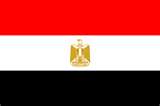
Egypt officially the Arab Republic of Egypt
The Nile Valley was home to one of the oldest cultures in the world, spanning three thousand years of continuous history. When Egypt fell under a series of foreign occupations after 343 BC, each left an indelible mark on the country's cultural landscape. Egyptian identity evolved in the span of this long period of occupation to accommodate, in principle, two new religions, Islam and Christianity; and a new language, Arabic, and its spoken descendant, Egyptian Arabic.
Egypt has been a republic since 18 June 1953. President Mohamed Hosni Mubarak has been the President of the Republic since 14 October 1981, after the assassination of President Mohammed Anwar El-Sadat. Mubarak is currently serving his fifth term in office (28 years). The last presidential election, in which Mubarak won a fifth consecutive term, was held in September 2005.
Egyptian culture has six thousand years of recorded history. Ancient Egypt was among the earliest civilizations and for millennia, Egypt maintained a strikingly complex and stable culture that influenced later cultures of Europe, the Middle East and other African countries. After the Pharaonic era, Egypt itself came under the influence of Hellenism, Christianity, and Islamic culture. Today, many aspects of Egypt's ancient culture exist in interaction with newer elements, including the influence of modern Western culture, itself with roots in ancient Egypt.
Egypt's capital city, Cairo, is Africa's largest city and has been renowned for centuries as a center of learning, culture and commerce. Egypt has the highest number of Nobel Laureates in Africa and the Arab World. Some Egyptian born politicians were or are at the helm of major international organizations like Boutros Boutros-Ghali of the United Nations and Mohamed ElBaradei of the IAEA.
Egypt is a recognized cultural trend-setter of the Arabic-speaking world, and contemporary Arab culture is heavily influenced by Egyptian literature, music, film and television. Egypt gained a regional leadership role during the 1950s and 1960s, which gave a further enduring boost to the standing of Egyptian culture in the Arab world.