



Tibet
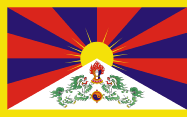
The economy of Tibet is dominated by subsistence agriculture, though tourism has become a growing industry in recent decades. The dominant religion in Tibet is Tibetan Buddhism; in addition, there is Bön, similar to Tibetan Buddhism, and there are also Tibetan Muslims and Christian minorities. Tibetan Buddhism is a primary influence on the art, music, and festivals of the region. Tibetan architecture reflects Chinese and Indian influences. Staple foods in Tibet are roasted barley, yak meat, and butter tea.
The proportion of the non-Tibetan population in Tibet is disputed. On the one hand, the Central Tibetan Administration of the Dalai Lama accuses China of actively swamping Tibet with migrants to alter Tibet's demographic makeup. On the other hand, according to the 2010 Chinese census ethnic Tibetans comprise 90% of a total population of 3 million in the Tibet Autonomous Region. Exact population numbers cannot be accurately reported because of PRC control. We witnessed, see photographs, large on-going multi-story apartment construction projects being built by the PRC. There is a modern train station that daily brings thousands of ethnic Han Chinese to resettle in Tibet. Since there are no industries in Tibet, we could not get information on what jobs these “immigrants” to Tibet are doing. In our travels we have met Chinese students. When you tell them we have traveld to Tibet they look at you quizzically. They have no knowledge of Tibet. If you replace Tibet with Zangqu they then give you acknowledgement.
For 350 years, Lhasa, the “City of the Sun,” has been at the political and economic center of Tibet. The country itself has existed since the seventh century as a remote mountain theocracy based on the mystical tenets of Lamaism, a form of Tantric Indian Buddhism coupled with Tibetan shamanism. Here, feudal Lamas whose spiritual authority was matched by their complete control of internal affairs ruled the rural population. Some reigns were benevolent, while others were ruthless.
The autonomy of the Lamas waxed and waned during various Chinese dynasties, with almost complete independence enjoyed during the Republican period (1912-1949). But things changed during China’s Cultural Revolution. In 1951, through military action and pressured negotiation, China re-established its sovereignty. After years of steadily increasing oppression, a revolt broke out in 1959, and the Dalai Lama was forced to flee to India.
Widespread persecution of the Tibetan people continued, reaching a peak during the Cultural Revolution. Thousands of monks and nuns were sent to labor camps. Hundreds of ancient monasteries were destroyed. Arbitrary agricultural reforms, such as imposed planting of unfamiliar crops and the collectivization of yak and goat herds, undermined traditional Tibetan life. The population was further destabilized when the Chinese government encouraged non-Tibetan Han Chinese people to settle in Tibet, thereby weakening the cultural foundations of the region.
In spite of these hardships, Tibetan culture has continued to thrive under the stewardship of the exiled Dalai Lama, who received the Nobel Peace Prize in 1989. A charismatic figure, he has been able to force the Chinese government into seeking normalized relations, restoring temples, allowing some religious freedoms, and permitting some degree of free enterprise. Attempts by the government to bring the Dalai Lama back to China have been unsuccessful so far. Meanwhile, the Dalai Lama, along with a growing coterie of international celebrities and activists, continues in the struggle to safeguard Tibetan human rights.
About Tibet 2